 admin1
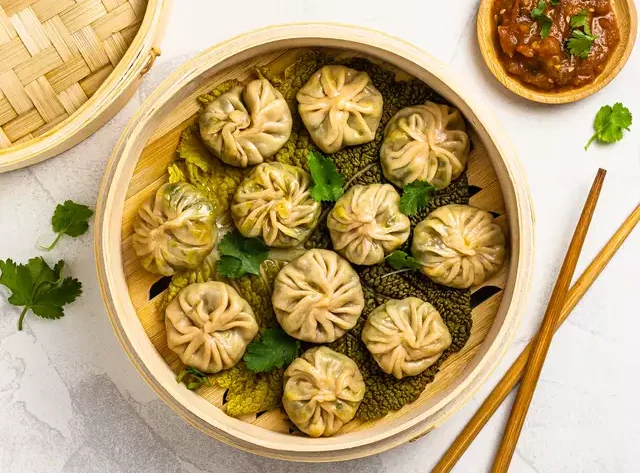
 Momo are soft steamed dumplings that are very popular in Nepal, Tibet, and parts of South Asia. They are similar in concept to Chinese dumplings but usually have a slightly thinner wrapper and a more spiced filling. Making them at home is not difficult, but the texture and flavor depend on careful dough preparation, well-seasoned filling, and proper steaming technique.
To start with the dough, take about three cups of all-purpose flour and place it in a large mixing bowl. Add a small pinch of salt to improve texture and flavor. Slowly pour in lukewarm water little by little while mixing with your hand. The dough should gradually come together into a rough mass. Do not add too much water at once because momo dough should be firm, not sticky. Once it forms, transfer it to a clean surface and knead it for about ten to fifteen minutes. The kneading is important because it develops gluten, which gives the wrapper its elasticity so it does not break while steaming. After kneading, the dough should feel smooth and slightly firm when pressed. Cover it with a damp cloth or plastic wrap and let it rest for at least thirty to forty-five minutes so it becomes easier to roll.
While the dough is resting, prepare the filling. The most common version uses minced chicken, but you can also use beef, lamb, or vegetables. For a classic chicken filling, take about five hundred grams of minced chicken and place it in a large bowl. Add finely chopped onions, grated garlic, grated ginger, and chopped green chilies according to your spice preference. Season with soy sauce, salt, black pepper, and a small amount of oil to keep the mixture moist. Some people also add finely chopped coriander leaves for freshness and aroma. To make the filling juicier, you can add a couple of tablespoons of water or chicken stock and mix everything vigorously in one direction until it becomes slightly sticky. This helps the filling stay soft and flavorful after steaming. Once mixed, let it rest for a few minutes so the flavors combine.
After the dough has rested, divide it into small equal portions. Roll each portion into a small ball and then flatten it into a thin circle using a rolling pin. The edges should be thinner than the center because this helps create a strong base that holds the filling without breaking. Try to keep the wrappers small and even in size so they cook uniformly.
Now comes the shaping of the momos, which is both practical and traditional. Place a small spoon of filling in the center of the wrapper. Be careful not to overfill, because too much filling can cause them to burst during steaming. Bring the edges together and pinch them to form pleats. You can make simple half-moon shapes by sealing the edges straight, or create a more traditional pleated dumpling by folding and pinching small sections around the top. The key is to seal them tightly so no air escapes and no filling leaks out during cooking. Place each shaped momo on a tray lightly dusted with flour or lined with parchment paper so they do not stick.
Prepare your steamer by bringing water to a boil in the bottom pot. Lightly oil the steamer tray or line it with cabbage leaves or parchment paper to prevent sticking. Arrange the momos in the steamer with a little space between each one because they expand slightly while cooking. Cover with a lid and steam over medium-high heat for about ten to fifteen minutes depending on size. You will know they are ready when the wrapper becomes slightly translucent and soft, and the filling is fully cooked and juicy inside.
While the momos are steaming, you can prepare a simple dipping sauce, often called chutney. A basic version is made by blending tomatoes, garlic, ginger, dried chilies, and salt, sometimes with a little vinegar or lemon juice for tanginess. The sauce can be served fresh or lightly cooked for a deeper flavor. It adds heat and acidity that balances the soft and mild dumplings very well.
Once the momos are cooked, remove them carefully from the steamer so they do not tear. Serve them immediately while hot, because they taste best when freshly steamed and soft. The wrapper should be tender but slightly chewy, and the filling should be juicy and aromatic.
You can also experiment with variations by adding finely chopped cabbage, carrots, or mushrooms to the filling for a vegetable version. Some people even mix chicken and vegetables together for a balanced texture. The dough and steaming method remain the same regardless of filling.
The key to perfect steamed momos is simple balance: a firm but elastic dough, a well-seasoned moist filling, careful shaping without air pockets, and steady steaming heat. Once you get comfortable with the process, you can adjust spices, fillings, and shapes to suit your own taste while keeping the traditional base technique unchanged.