 admin1
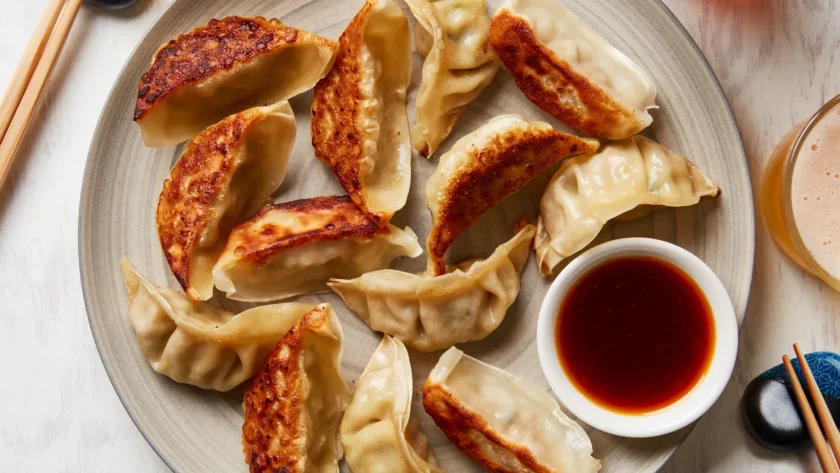
 Gyoza are Japanese pan-fried dumplings that are crisp on the bottom, soft on top, and juicy inside. They are closely related to Chinese jiaozi, but the Japanese style is usually lighter in filling, more garlicky, and often cooked using a specific “steam-fry” technique that creates the signature crispy base.
To begin making gyoza at home, start with the dough. Traditionally, gyoza wrappers are thin and elastic. You can make them from scratch by mixing about two cups of all-purpose flour with around three-quarters of a cup of warm water and a pinch of salt. Add water gradually while mixing until the dough comes together. Knead it for about ten minutes until smooth and elastic. The dough should feel soft but not sticky. Once kneaded, cover it tightly and let it rest for at least thirty to sixty minutes. This resting stage is important because it relaxes gluten and makes rolling much easier and more consistent.
While the dough rests, prepare the filling. A classic Japanese gyoza filling uses minced pork as the base, because it stays juicy after cooking. Take about 400–500 grams of minced pork and place it in a large bowl. Add finely chopped cabbage, which is a key ingredient for texture and moisture balance. The cabbage should be salted lightly, left to sit for a few minutes, then squeezed firmly to remove excess water so the filling does not become soggy. Add finely chopped garlic, grated ginger, and finely chopped green onions. Season with soy sauce, sesame oil, salt, and a small amount of white pepper. Some recipes also include a touch of sugar to balance flavors and a splash of sake or cooking wine for aroma. Mix everything thoroughly in one direction until the mixture becomes slightly sticky and well combined. This helps the filling bind together and stay juicy inside the wrapper.
After the dough has rested, divide it into small equal portions and roll each piece into a ball. Flatten each ball and roll it into a thin circular wrapper, slightly thicker in the center and thinner at the edges. Gyoza wrappers are usually smaller than Chinese dumplings, so aim for a delicate, bite-sized shape.
Now comes the wrapping process. Place a small spoon of filling in the center of each wrapper. Do not overfill, because gyoza need to be tightly sealed to create steam pressure during cooking. Fold the wrapper in half to form a half-moon shape. Then, starting from one end, make small pleats along one side of the edge, pressing each pleat firmly against the smooth edge to seal it. The pleated side should curve slightly, while the back remains smooth. Make sure no air pockets remain inside, as trapped air can cause the gyoza to burst during cooking. Place each finished dumpling on a tray lightly dusted with flour so they do not stick.
The signature cooking method for gyoza is called “steam-frying.” Heat a non-stick pan over medium heat and add a small amount of oil. Arrange the gyoza flat-side down in the pan in a circular pattern. Fry them for about two to three minutes until the bottoms become golden and crisp. Next, carefully pour in a small amount of water, just enough to cover the base of the pan (usually about a quarter cup). Immediately cover the pan with a lid to trap steam. Let them steam for about six to eight minutes. During this time, the water cooks the filling and softens the top of the wrappers while the bottom stays crisp. Once the water has mostly evaporated, remove the lid and allow the remaining moisture to cook off. If desired, add a few drops of oil at the end to re-crisp the bottoms slightly before serving.
For the dipping sauce, a traditional gyoza sauce is simple but flavorful. Mix soy sauce with rice vinegar in equal parts, and optionally add a few drops of chili oil for heat. Some people also add grated garlic or sesame seeds for extra depth.
Gyoza can also be steamed or boiled, but pan-frying remains the most popular method because it creates the contrasting textures that define them. You can also freeze uncooked gyoza by placing them on a tray first until solid, then storing them in bags. They can be cooked directly from frozen without thawing, just with a slightly longer steaming time.
Vegetarian versions are also common and usually include finely chopped cabbage, mushrooms, carrots, tofu, and glass noodles. The key is always to remove excess moisture from vegetables so the filling does not become watery during cooking.
The most important parts of good gyoza are a balanced filling that is juicy but not wet, a thin wrapper that holds its shape, and proper sealing to trap steam. When done correctly, each bite gives you a crisp bottom, tender top, and flavorful juicy filling inside, which is exactly what makes gyoza so popular.