 admin1
 Vanilla Custard (Large Batch Detailed Recipe)
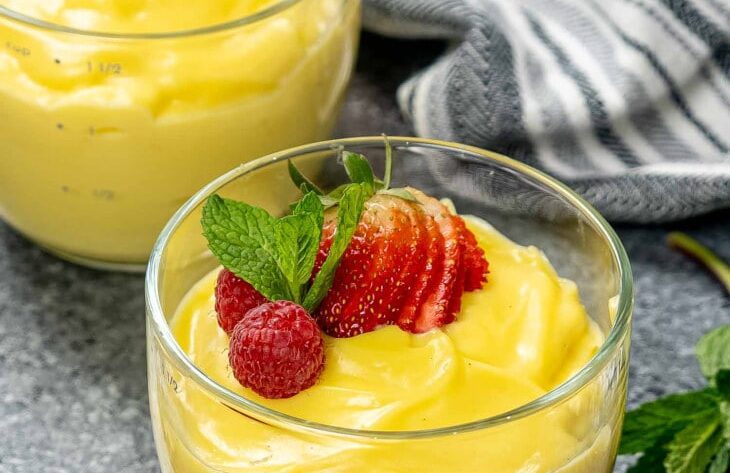
Vanilla custard is a rich, smooth, creamy dessert made from milk, sugar, egg yolks, and vanilla. This detailed recipe produces a generous amount of custard suitable for serving a large family gathering or for using in trifles, pastries, fruit desserts, cakes, puddings, and other sweet dishes.
Ingredients
2 liters whole milk
12 large egg yolks
250 grams granulated sugar
80 grams cornstarch
2 tablespoons pure vanilla extract
1 vanilla bean (optional, for deeper flavor)
100 grams unsalted butter
1/2 teaspoon salt
200 milliliters heavy cream
Extra vanilla extract to taste if desired
Method
Begin by pouring the milk into a large heavy-bottomed saucepan. If using a vanilla bean, split it lengthwise with a sharp knife and scrape out the tiny seeds. Add both the seeds and the pod to the milk. Place the saucepan over medium heat and slowly warm the milk. Do not allow it to boil. Heating the milk gently helps extract maximum flavor from the vanilla bean and prepares the mixture for the custard-making process.
While the milk is warming, place the egg yolks into a very large mixing bowl. Add the sugar and whisk continuously for several minutes until the mixture becomes lighter in color and slightly thickened. This process helps dissolve some of the sugar and creates a smoother final custard.
Add the cornstarch and salt to the egg mixture. Continue whisking until no lumps remain. The mixture should become smooth and uniform. Cornstarch acts as a stabilizer and thickener, helping prevent curdling and creating a silky texture.
Once the milk is hot and steaming but not boiling, remove the vanilla pod if used. Slowly pour about one-third of the hot milk into the egg mixture while whisking constantly. This step is called tempering and prevents the eggs from cooking too quickly. Continue whisking as you gradually add the milk.
After tempering, slowly pour the entire egg mixture back into the saucepan containing the remaining milk. Place the saucepan over medium-low heat. Stir constantly using a whisk or wooden spoon, making sure to reach the corners and bottom of the pan.
Continue cooking the custard slowly. After several minutes it will begin to thicken. Do not stop stirring, as this prevents lumps from forming and protects the mixture from scorching. The custard is ready when it coats the back of a spoon and leaves a clear line when a finger is drawn through it.
Once thickened, remove the saucepan from the heat immediately. Add the butter in small pieces and stir until fully melted and incorporated. Add the vanilla extract and mix thoroughly. The butter contributes richness, shine, and a luxurious mouthfeel.
For an even creamier result, stir in the heavy cream while the custard is still warm. Mix until perfectly smooth. Taste the custard and add a small amount of additional vanilla extract if a stronger vanilla flavor is desired.
To achieve an exceptionally smooth texture, strain the custard through a fine-mesh sieve into a clean bowl. This removes any tiny bits of cooked egg or vanilla pod residue. Although optional, this step creates a professional-quality dessert.
Allow the custard to cool slightly at room temperature. To prevent a skin from forming, place plastic wrap directly on the surface of the custard. Refrigerate for at least four hours, though overnight chilling produces the best flavor and texture.
Serving Suggestions
Serve the vanilla custard on its own in dessert bowls.
Layer it with sponge cake and fruit to create a trifle.
Use it as a filling for cream puffs, éclairs, doughnuts, tarts, pastries, and cakes.
Spoon it over fresh strawberries, bananas, peaches, mangoes, or berries.
Use it as a topping for puddings and baked desserts.
Fold whipped cream into chilled custard to create a lighter dessert cream.
Storage
Store the custard in an airtight container in the refrigerator for up to four days. Stir gently before serving if any separation occurs. Do not leave the custard at room temperature for extended periods because it contains dairy and eggs. Freezing is not recommended because the texture may become grainy after thawing.
Tips for Perfect Vanilla Custard
Use fresh egg yolks for the richest flavor and smoothest texture.
Cook over moderate heat and never rush the thickening process.
Whisk continuously to avoid lumps.
Use high-quality vanilla extract or a real vanilla bean for superior flavor.
Straining the custard after cooking produces an especially silky consistency.
If the custard becomes too thick, whisk in a little cold milk until the desired consistency is reached.
If the custard seems too thin, continue cooking for a few more minutes while stirring constantly.
This recipe yields a large quantity of creamy, flavorful vanilla custard with a rich vanilla aroma, smooth texture, and balanced sweetness, making it suitable for both serving as a dessert and incorporating into a wide variety of bakery and pastry preparations.