 admin1
 Kabsa is one of the most famous rice dishes of the Arabian Peninsula, especially popular in Saudi Arabia. It combines fragrant long-grain rice, tender meat, tomatoes, and a rich blend of spices that create its distinctive aroma and flavor. The recipe below is designed to be detailed and comprehensive, producing a large family-sized serving with authentic flavor.
Ingredients:
2 kilograms chicken cut into medium pieces or 2 kilograms lamb pieces with bone
4 cups basmati rice
8 cups water or as needed
4 large onions finely chopped
8 cloves garlic minced
4 large tomatoes finely chopped
4 tablespoons tomato paste
4 medium carrots grated
4 green chilies slit lengthwise
1 cup raisins
1/2 cup almonds
1/2 cup cashews
1/2 cup pine nuts if available
1/2 cup vegetable oil or ghee
4 bay leaves
6 green cardamom pods
6 cloves
2 black cardamom pods
2 cinnamon sticks
1 teaspoon black peppercorns
1 teaspoon cumin seeds
1 teaspoon coriander seeds
1 teaspoon dried lime powder or 2 whole dried black limes
1 tablespoon ground cumin
1 tablespoon ground coriander
1 teaspoon turmeric powder
1 teaspoon paprika
1 teaspoon ground black pepper
1/2 teaspoon ground cinnamon
1/4 teaspoon ground nutmeg
1 teaspoon ground cardamom
2 tablespoons salt or according to taste
1 tablespoon brown sugar
1/4 cup chopped fresh coriander leaves
1/4 cup chopped fresh parsley
1 tablespoon rose water optional
1 tablespoon saffron soaked in 3 tablespoons warm water optional
Preparation of Rice:
Wash the basmati rice several times until the water becomes mostly clear. Soak the rice in cold water for 30 to 45 minutes. Drain completely and keep aside.
Preparing the Meat or Chicken:
Heat a large heavy-bottomed pot over medium heat. Add the oil or ghee. Add chopped onions and cook slowly for 10 to 15 minutes until deep golden brown. Stir frequently to prevent burning. Add garlic and cook for 2 minutes until fragrant. Add tomato paste and cook for another 2 minutes. Add chopped tomatoes and cook until they become soft and release their juices, about 10 minutes. Add grated carrots and cook for 3 minutes.
Add the bay leaves, green cardamom, black cardamom, cloves, cinnamon sticks, black peppercorns, cumin seeds, coriander seeds, and dried limes. Stir for 2 minutes so the spices release their aroma.
Add the chicken or lamb pieces and mix thoroughly with the onion and tomato mixture. Cook for 10 to 15 minutes, stirring occasionally, until the meat changes color and begins to brown lightly.
Add the ground cumin, ground coriander, turmeric, paprika, black pepper, cinnamon, nutmeg, ground cardamom, salt, and brown sugar. Stir thoroughly so every piece of meat is coated with the spice mixture.
Pour in 8 cups of water. Bring to a boil and skim off any foam that rises to the surface. Reduce the heat to low and cover the pot. If using chicken, cook for approximately 40 to 50 minutes until tender. If using lamb, cook for approximately 1.5 to 2 hours or until very tender.
Once the meat is cooked, carefully remove the pieces and set aside. Strain the broth if you prefer a smoother rice texture. Measure the broth. For 4 cups of soaked rice, you will need approximately 6 to 7 cups of broth depending on the rice variety.
Preparing the Rice:
Return the broth to the pot. Taste and adjust salt if necessary. Bring the broth to a gentle boil. Add the drained rice and green chilies. Stir only once to distribute the rice evenly.
Cook uncovered on medium heat until most of the liquid has been absorbed and small holes begin appearing on the surface of the rice. This usually takes 10 to 15 minutes.
Reduce the heat to the lowest setting. Arrange the cooked chicken or lamb pieces over the rice. Sprinkle chopped coriander and parsley over the top. If using saffron water and rose water, drizzle them evenly across the rice.
Cover the pot tightly. You can place a clean kitchen towel between the lid and pot to trap steam. Cook on very low heat for 25 to 30 minutes. This steaming process allows the rice to absorb all the flavors and become fluffy.
Preparing the Garnish:
In a small frying pan, heat a few tablespoons of oil or ghee. Fry the almonds until golden. Remove and drain. Fry the cashews until lightly golden. Remove and drain. Fry the pine nuts briefly until golden. Finally add the raisins and cook for 20 to 30 seconds until they puff up. Remove immediately to avoid burning.
Final Assembly:
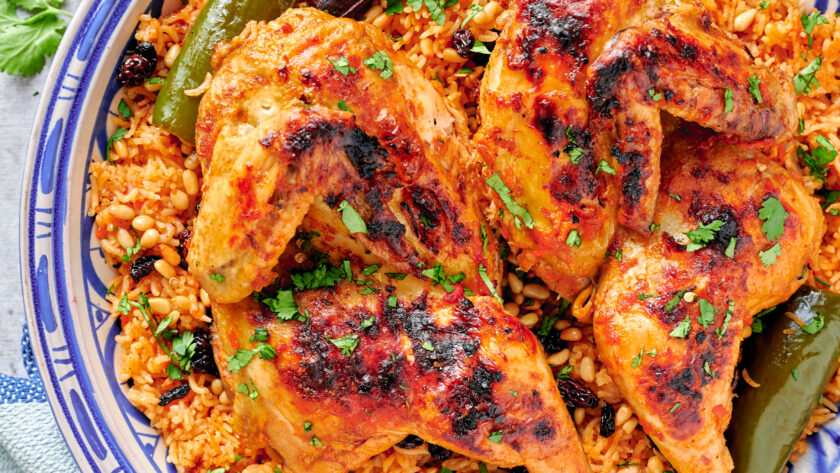
Gently fluff the rice using a fork. Transfer the rice to a very large serving platter. Arrange the chicken or lamb pieces attractively on top. Scatter the fried almonds, cashews, pine nuts, and raisins generously over the surface.
Traditional Serving Suggestions:
Kabsa is traditionally served with a fresh tomato salsa known as daqoos. To make daqoos, blend 4 tomatoes, 2 green chilies, 2 cloves garlic, a handful of coriander leaves, juice of 1 lemon, and salt to taste until slightly chunky. Serve chilled alongside the hot kabsa.
A bowl of plain yogurt or cucumber yogurt salad also pairs beautifully with kabsa. Many families serve it with mixed green salad, pickled vegetables, and warm Arabic bread.
Cooking Tips for Authentic Flavor:
Using whole spices instead of only ground spices creates a deeper and more authentic aroma.
Dried black limes are one of the signature ingredients of traditional Gulf-style kabsa and provide a subtle smoky citrus flavor.
Allowing the rice to steam slowly on very low heat is essential for fluffy grains and proper flavor absorption.
For richer flavor, replace some of the water with homemade chicken or lamb stock.
If using chicken, lightly grill or broil the cooked chicken pieces for a few minutes before placing them on the rice to achieve a beautiful golden color.
The dish often tastes even better after resting for 15 to 20 minutes before serving because the flavors continue to develop.
This large recipe serves approximately 10 to 12 people and produces a deeply aromatic, restaurant-style kabsa with rich spices, tender meat, fluffy rice, and a luxurious nut garnish.