 admin1
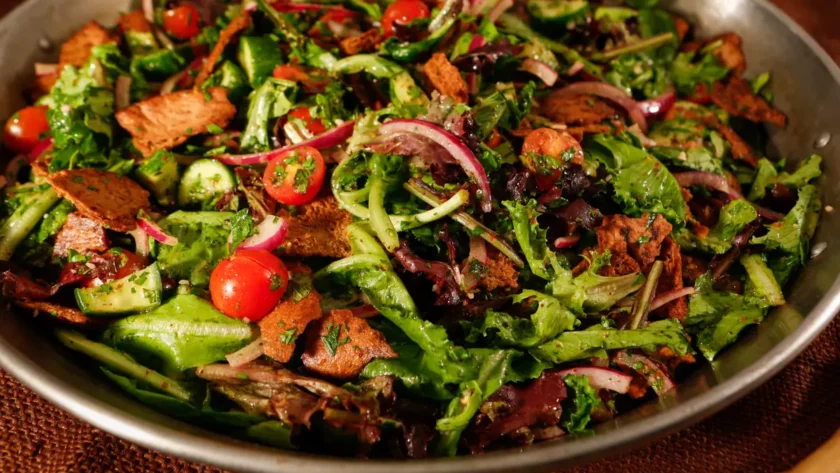
 Fattoush is one of the most famous salads in Levantine cuisine, especially popular in Lebanon, Syria, Jordan, and Palestine. It is a vibrant and refreshing salad made with crisp vegetables, fresh herbs, toasted or fried pieces of pita bread, and a tangy dressing flavored with sumac and lemon juice. Fattoush is known for its combination of textures and bright flavors, making it a perfect accompaniment to grilled meats, shawarma, kebabs, falafel, and other Middle Eastern dishes. This detailed recipe produces a large family-sized bowl of authentic Fattoush that serves approximately 8 to 10 people.
Ingredients required include 4 large tomatoes diced into medium-sized pieces, 4 cucumbers diced, 2 green bell peppers diced, 1 red bell pepper diced, 8 radishes thinly sliced, 2 large romaine lettuce hearts chopped, 1 bunch fresh parsley finely chopped, 1/2 bunch fresh mint leaves chopped, 6 green onions finely sliced, 3 large pita breads, 1/2 cup olive oil for frying or brushing, 1 teaspoon salt or according to taste, and 1 tablespoon sumac for garnish.
For the dressing prepare 1/2 cup extra virgin olive oil, 1/4 cup freshly squeezed lemon juice, 2 tablespoons pomegranate molasses, 2 tablespoons sumac, 2 garlic cloves crushed into a paste, 1 teaspoon salt, 1/2 teaspoon black pepper, and 1 teaspoon dried mint.
Begin by preparing the pita bread. Cut each pita into bite-sized squares or triangles. You may either fry them or bake them depending on your preference. For frying, heat olive oil in a pan and fry the pita pieces until golden and crispy. Remove and place on paper towels. For baking, lightly brush the pita pieces with olive oil and bake at 190°C until golden and crisp. Allow them to cool completely before using.
Wash and dry all vegetables thoroughly. Properly dried vegetables help prevent the salad from becoming watery. Dice the tomatoes, cucumbers, and bell peppers into similar-sized pieces for a balanced texture. Thinly slice the radishes and green onions. Chop the lettuce into bite-sized pieces. Finely chop the parsley and mint leaves.
Place all prepared vegetables and herbs into a very large mixing bowl. Gently toss everything together until evenly distributed. The combination of crisp vegetables and fragrant herbs forms the foundation of authentic Fattoush.
In a separate bowl prepare the dressing. Combine olive oil, lemon juice, pomegranate molasses, sumac, crushed garlic, salt, black pepper, and dried mint. Whisk thoroughly until the dressing becomes well blended and slightly thickened.
Pour the dressing over the vegetable mixture and toss gently to coat every ingredient evenly. The dressing should lightly cover the vegetables without making the salad soggy.
Just before serving, add the crispy pita pieces and toss gently once more. Adding the bread at the last moment ensures it remains crunchy and does not absorb too much moisture from the vegetables and dressing.
Transfer the salad to a large serving platter or bowl. Sprinkle additional sumac over the surface for extra flavor and visual appeal. Some cooks also drizzle a small amount of extra virgin olive oil over the top before serving.
Traditional Fattoush is often served as part of a mezze spread alongside hummus, baba ghanoush, tabbouleh, falafel, kibbeh, grilled meats, and warm pita bread. It is also an excellent side dish for shawarma, kebabs, roasted chicken, and seafood.
For the most authentic flavor, use fresh lemon juice rather than bottled juice and do not omit the sumac. Sumac provides the characteristic tangy flavor that distinguishes Fattoush from ordinary salads. Pomegranate molasses adds a subtle sweetness and depth that balances the acidity beautifully.
Many regional variations include ingredients such as purslane, arugula, fresh thyme leaves, or additional herbs. Some families prefer extra radishes for more crunch, while others increase the amount of mint for a fresher flavor.
To maintain maximum freshness, prepare the vegetables and dressing separately and combine them shortly before serving. This prevents the vegetables from losing their crisp texture. The pita bread should always be added at the very end to preserve its crunch.
This generous recipe serves approximately 8 to 10 people and produces an authentic Fattoush with crisp vegetables, fragrant herbs, crunchy pita chips, and a bright, tangy dressing that perfectly captures the fresh and vibrant flavors of traditional Levantine cuisine.