 admin1
 Mango Mousse is a light, airy, creamy dessert made by folding whipped cream into mango puree so it becomes fluffy like a cloud but still rich with tropical fruit flavor. It is very different from mango kulfi because mousse is soft, chilled, and spoonable rather than frozen and dense, and the texture depends entirely on how well you whip and fold the mixture.
To make a very detailed homemade mango mousse, start by choosing ripe, sweet, and non-fibrous mangoes such as Sindhri, Chaunsa, or Alphonso. The quality of mangoes decides almost everything because this dessert has very few ingredients. You will need about 2 to 3 large mangoes or roughly 2 cups of thick mango pulp. Peel the mangoes, remove the seed, and blend the flesh into a completely smooth puree. If the mangoes are very sweet, you may not need extra sugar, but taste the pulp and adjust with 2 to 4 tablespoons of powdered sugar if needed. Chill this puree in the refrigerator while you prepare the cream.
Now take 1.5 to 2 cups of cold heavy whipping cream. The cream must be very cold for it to whip properly, so keep it in the fridge until the last moment. Pour it into a large chilled bowl and begin whipping using a hand whisk or electric mixer. Start on low speed and gradually increase to medium-high. Whip until soft peaks form, meaning the cream becomes thick and holds shape but still slightly folds over when you lift the whisk. Be careful not to overwhip because it can turn grainy or buttery.
At this stage, you can add 2 to 3 tablespoons of powdered sugar and a few drops of vanilla essence if you want a mild aroma that enhances mango flavor without overpowering it. Mix gently to combine. Now comes the most important step, combining mango puree with whipped cream. Add the chilled mango puree gradually into the whipped cream. Do not pour everything at once; instead, add it in portions so the mixture stays airy.
Use a spatula and fold gently using slow lifting motions from the bottom to the top. Folding is important because it traps air inside the cream, giving mousse its signature light texture. If you mix aggressively, the cream will deflate and the mousse will become dense instead of fluffy. Continue folding until the mixture becomes uniform in color, usually a pale golden mango shade with a smooth, airy consistency.
Once mixed, you can also add optional ingredients depending on your taste. A few small mango chunks can be folded in for texture. A teaspoon of lemon juice can enhance brightness and balance sweetness. Some people also add a small amount of gelatin dissolved in warm water (about 1 teaspoon gelatin for stability) if they want the mousse to hold a firmer shape for cakes or layered desserts, but traditional mousse does not require it.
Now transfer the mixture into serving glasses, bowls, or dessert cups. Tap them lightly on the counter to remove large air bubbles while keeping the airy structure intact. Cover the cups with plastic wrap and refrigerate for at least 4 to 6 hours. This chilling time allows the mousse to set and flavors to blend together fully.
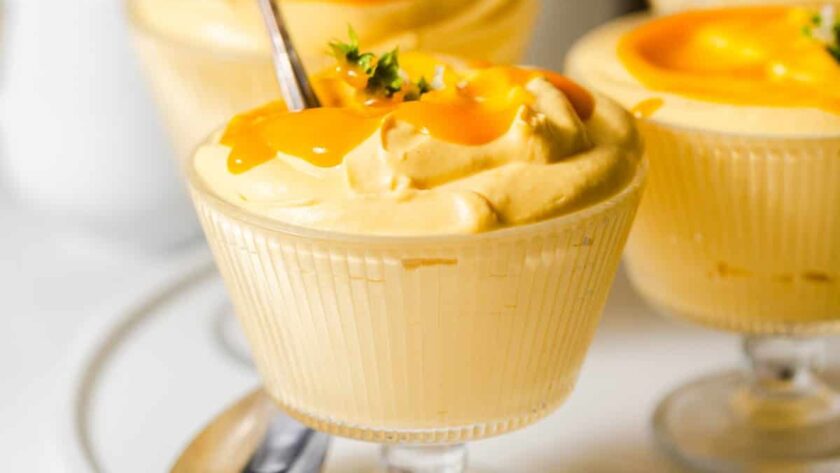
When ready to serve, the mousse should be light, creamy, and airy, with a spoon melting into it effortlessly. The mango flavor should feel fresh and intense, balanced by the soft richness of whipped cream. You can garnish it with chopped pistachios, mango cubes, mint leaves, or even a drizzle of mango puree on top for presentation.
For variations, you can make a layered mango mousse by alternating mango puree and whipped cream in glasses for a visually striking dessert. Another variation is mango chocolate mousse fusion, where a thin layer of chocolate ganache is added at the bottom before pouring the mango mixture. For a healthier version, some people replace part of the cream with Greek yogurt, which gives a slightly tangy and lighter profile.
The final result should be smooth, airy, and spoon-soft, almost like eating a chilled mango cloud. The success of mango mousse depends mostly on two things: well-whipped cream and gentle folding. If both are done correctly, the dessert will have a restaurant-quality texture with a naturally rich mango flavor.