 admin1
 Hummus is one of the most famous and beloved dishes of the Middle East. Known for its creamy texture, rich flavor, and nutritional value, hummus is made primarily from chickpeas, tahini, lemon juice, and garlic. It is served as an appetizer, dip, side dish, or part of a traditional mezze spread. Authentic hummus should be smooth, light, creamy, and perfectly balanced between the nutty flavor of tahini and the brightness of fresh lemon juice. This detailed recipe creates a large batch of restaurant-style hummus that serves approximately 8 to 10 people.
Ingredients required include 500 grams dried chickpeas, 1 teaspoon baking soda, 8 cups water for soaking, additional water for cooking, 1 cup tahini, 6 tablespoons freshly squeezed lemon juice, 4 cloves garlic crushed into a paste, 2 teaspoons salt or according to taste, 1 teaspoon ground cumin, 6 to 8 tablespoons ice-cold water, 4 tablespoons extra virgin olive oil, 2 tablespoons chopped parsley, 1 teaspoon paprika, and a handful of whole cooked chickpeas for garnish.
Begin by sorting through the dried chickpeas and removing any damaged beans or debris. Place the chickpeas in a very large bowl and cover them with plenty of water. Add the baking soda and stir well. Allow the chickpeas to soak overnight for at least 12 to 18 hours. The chickpeas will expand significantly during soaking, so use plenty of water.
The next day drain and rinse the soaked chickpeas thoroughly. Transfer them to a large cooking pot and cover with fresh water. Bring the water to a boil and remove any foam that rises to the surface. Reduce the heat to medium and cook the chickpeas until extremely soft. This may take 1½ to 2 hours depending on the chickpeas. Properly cooked chickpeas should easily mash between your fingers without resistance.
For exceptionally smooth hummus, many cooks remove the loose skins from the cooked chickpeas. Although this step requires extra time, it helps achieve an ultra-creamy texture. Drain the cooked chickpeas while reserving some of the cooking liquid.
In a food processor combine the garlic, lemon juice, and salt. Blend briefly and allow the mixture to rest for several minutes. This mellows the sharpness of the garlic and creates a smoother flavor. Add the tahini and blend until the mixture becomes thick and creamy. Slowly add a few tablespoons of ice-cold water while blending. The tahini mixture will lighten in color and become fluffy.
Add the cooked chickpeas and ground cumin to the food processor. Blend continuously for several minutes. Gradually add ice-cold water or some reserved chickpea cooking liquid until the hummus reaches a very smooth and creamy consistency. Continue blending longer than you think necessary because extended blending contributes significantly to the final texture.
Taste the hummus and adjust the seasoning as needed. Additional lemon juice can increase brightness, extra salt can enhance flavor, and more tahini can provide a richer taste. The hummus should be creamy enough to spread easily but thick enough to hold its shape.
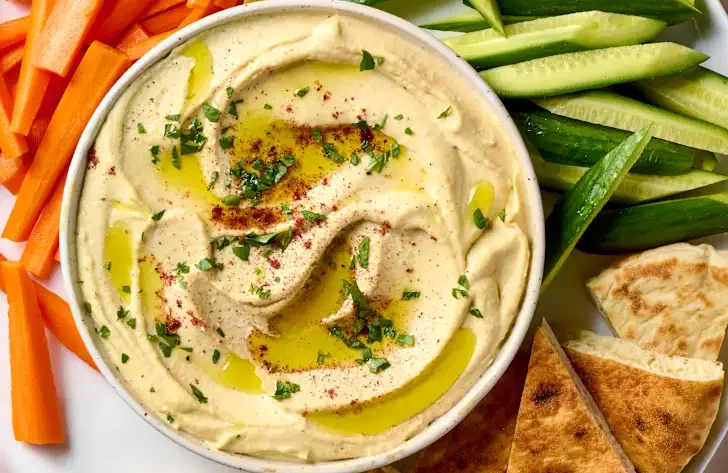
Transfer the hummus to a large serving dish. Using the back of a spoon, create decorative swirls across the surface. Drizzle generously with extra virgin olive oil. Scatter whole chickpeas over the top and sprinkle with paprika and chopped parsley.
Authentic hummus is often served at room temperature rather than straight from the refrigerator. This allows the flavors to be more pronounced and the texture to remain soft and creamy.
Traditional accompaniments include warm pita bread, fresh vegetables such as cucumber, carrots, radishes, and bell peppers, olives, pickles, and various grilled meats. Hummus also works beautifully as a sandwich spread, wrap filling, or accompaniment to falafel.
For the smoothest possible hummus, use dried chickpeas instead of canned varieties. Overcooking the chickpeas slightly is preferable to undercooking them because softness is essential for a creamy result. Ice-cold water helps create a lighter and fluffier texture when blended with tahini. High-quality tahini made from pure sesame seeds significantly improves the flavor.
Some regional variations include toppings such as spiced minced meat, toasted pine nuts, roasted mushrooms, whole fava beans, roasted red peppers, or additional spices. Despite these variations, the classic version remains the most widely enjoyed.
This generous recipe produces a silky, rich, and authentic hummus with deep sesame flavor, bright lemon notes, and a luxurious creamy texture that rivals the best hummus served in traditional Middle Eastern restaurants.