 admin1
 Creamy Soft Scrambled Eggs
Introduction
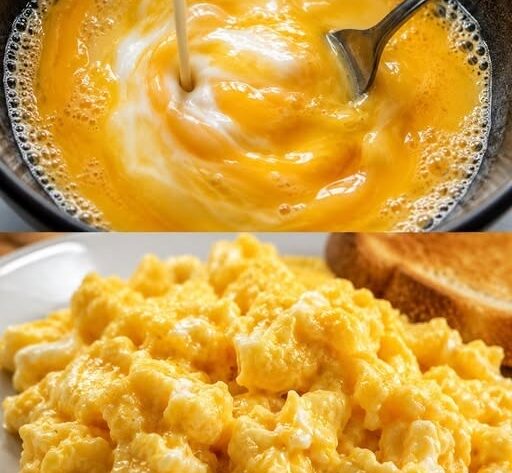
Creamy Soft Scrambled Eggs are a luxurious, silky version of scrambled eggs that are gently cooked over low heat to create a custard-like texture. Unlike traditional scrambled eggs that are cooked quickly over high heat and become firm or slightly dry, this method focuses on slow cooking and constant gentle stirring to produce soft curds that are creamy, rich, and almost melt in the mouth.
The key to this dish is temperature control and patience. By cooking the eggs slowly and often removing them from heat during cooking, the proteins in the eggs coagulate gently, trapping moisture and fat, which results in a smooth, velvety texture. Many chefs consider this the highest expression of scrambled eggs because of its delicate consistency and rich flavor.
Scrambled eggs prepared in this creamy soft style are often served in fine dining breakfasts, brunch menus, or simple home breakfasts when you want something comforting yet elegant.
Yield
2 servings
Preparation Time
5 to 10 minutes
Cooking Time
8 to 12 minutes
Total Time
15 to 20 minutes
Ingredients
Main Ingredients
4 large eggs
2 to 3 tablespoons heavy cream or whole milk
1 tablespoon unsalted butter
Salt to taste (start with ¼ teaspoon)
Black pepper to taste
Optional Flavor Enhancers
1 tablespoon grated Parmesan cheese
1 teaspoon cream cheese for extra richness
1 teaspoon chopped chives or green onions
½ teaspoon garlic powder (optional, subtle flavor)
1 teaspoon olive oil (optional, for blending with butter)
Equipment Needed
Non-stick skillet or small saucepan
Heat-resistant spatula or silicone spatula
Mixing bowl
Whisk or fork
Measuring spoons
Stove with low heat control
Step 1: Preparing the Eggs
Crack the eggs into a mixing bowl.
Add salt and pepper.
Pour in heavy cream or milk.
Whisk slowly and steadily until the mixture is fully combined and slightly frothy.
The goal is not to incorporate too much air but to create a uniform mixture where yolks and whites are fully blended.
If using Parmesan or cream cheese, you can mix it into the eggs at this stage for added creaminess.
Let the mixture rest for 1 to 2 minutes so the proteins relax slightly before cooking.
Step 2: Preparing the Pan
Place a non-stick skillet on low heat.
Add butter and allow it to melt slowly.
Do not let the butter brown; it should melt gently and coat the pan evenly.
You can also combine butter with a small amount of olive oil to increase heat stability, though butter alone is traditional for flavor.
Step 3: Starting the Cooking Process
Pour the egg mixture into the pan while it is still on low heat.
Let it sit for a few seconds without stirring so the bottom layer begins to set slightly.
Then, using a silicone spatula, gently push the eggs from the edges toward the center.
This creates soft curds and allows uncooked egg to flow to the bottom of the pan.
Step 4: Gentle Stirring Technique
Continue stirring slowly and continuously.
The key is to move the eggs gently, not aggressively.
If the eggs begin to set too quickly, lift the pan off the heat for a few seconds while continuing to stir. This prevents overcooking.
Then return it to the heat and continue the process.
This technique of alternating heat exposure ensures ultra-soft texture.
Step 5: Controlling Heat for Creaminess
Keep the heat very low throughout the cooking process.
High heat will cause the eggs to become rubbery and dry.
The ideal texture develops when eggs are cooked slowly and allowed to remain slightly underdone before being removed from heat.
As the eggs cook, they will transform from liquid to soft curds that look glossy and creamy.
Step 6: Final Stage of Cooking
When the eggs are mostly set but still slightly runny and glossy, remove the pan from heat.
The residual heat will continue to cook them gently.
This is the most important step because it prevents overcooking.
At this stage, you can add a small knob of butter or a teaspoon of cream cheese for extra richness and silkiness.
Stir gently until fully incorporated.
Step 7: Adjusting Texture and Flavor
Check the consistency.
If you prefer softer eggs, remove them earlier while they are still slightly wet.
If you prefer slightly firmer texture, leave them on heat for a few extra seconds.
Adjust seasoning with salt and pepper if needed.
Add chopped herbs like chives or parsley for freshness.
Step 8: Serving Preparation
Serve immediately after cooking because scrambled eggs continue to cook from residual heat and may become firmer if left in the pan.
Transfer gently to a plate using a spatula.
Avoid pressing or flattening them to maintain fluffy structure.
Step 9: Serving Suggestions
Scrambled eggs prepared in this creamy soft style pair well with many breakfast and brunch dishes.
Serve with toasted sourdough bread or buttered toast.
Pair with avocado slices for a creamy combination.
Serve alongside smoked salmon for a gourmet breakfast.
Pair with sautéed mushrooms or spinach for a healthy meal.
Use as a filling for breakfast sandwiches or wraps.
They also pair well with fresh fruit and coffee for a balanced breakfast plate.
Step 10: Storage Instructions
Scrambled eggs are best eaten immediately after cooking.
However, if needed, store leftovers in an airtight container in the refrigerator for up to 1 day.
Reheat gently on low heat with a small amount of butter or cream to restore softness.
Avoid microwaving at high power because it will make them rubbery.
Tips for Best Results
Always cook on low heat to maintain creamy texture.
Stir continuously but gently to form soft curds.
Remove from heat slightly before fully cooked for best creaminess.
Use fresh eggs for better flavor and structure.
Add cream or milk for extra softness.
Do not over-season before cooking, adjust at the end if needed.
Use a non-stick pan to prevent sticking and tearing.
Flavor Profile
Scrambled eggs made in this creamy soft style have a rich, buttery, and delicate flavor with a silky mouthfeel. The eggs taste light yet indulgent, with subtle creaminess from dairy and optional cheese. The texture is the defining feature, smooth and custard-like, with soft curds that melt on the tongue rather than breaking into dry chunks.
Nutritional Estimate Per Serving
Calories: 220 to 320 depending on dairy used
Protein: 14 to 18 grams
Fat: 18 to 25 grams
Carbohydrates: 1 to 3 grams
Sugar: less than 1 gram
Sodium: varies depending on salt and cheese
Creamy Soft Scrambled Eggs are a simple yet refined dish that transforms basic eggs into a luxurious breakfast experience through careful heat control and gentle cooking technique.