 admin1
 Soft skillet flatbread is a versatile bread that is cooked on a stovetop rather than baked in an oven. It has a tender texture, a slightly chewy bite, and a rich flavor that pairs beautifully with curries, grilled meats, vegetables, dips, soups, and spreads. This detailed recipe is designed to produce exceptionally soft and flexible flatbreads that remain tender even after cooling.
Introduction
Flatbread has been a staple food in many cultures for thousands of years. This version uses simple pantry ingredients and a straightforward cooking method. The addition of yogurt and a small amount of oil helps create a softer texture, while proper kneading and resting allow the dough to develop elasticity and flavor.
The recipe yields approximately 8 to 10 medium flatbreads depending on the size and thickness you choose.
Preparation Time
Preparation Time: 25 minutes
Resting Time: 1 hour
Cooking Time: 20–25 minutes
Total Time: Approximately 1 hour 50 minutes
Servings: 8–10 flatbreads
Ingredients
For the Dough
4 cups (500 grams) all-purpose flour
1 teaspoon salt
1 tablespoon sugar
2 teaspoons instant yeast
1 cup (240 ml) warm milk
½ cup (120 ml) plain yogurt
3 tablespoons vegetable oil or olive oil
½ to ¾ cup (120–180 ml) warm water, as needed
For Brushing After Cooking
3 tablespoons melted butter
1 tablespoon olive oil
Optional: finely chopped fresh parsley, cilantro, or garlic
Equipment Needed
Large mixing bowl
Measuring cups and spoons
Wooden spoon or dough scraper
Clean work surface
Rolling pin
Large skillet, cast-iron pan, or heavy frying pan
Kitchen towel
Pastry brush
Plate or bread basket
Step 1: Prepare the Dry Ingredients
In a large mixing bowl, add the flour, salt, sugar, and instant yeast.
Whisk the ingredients together thoroughly to distribute the yeast and salt evenly throughout the flour. Proper mixing at this stage helps create a uniform dough and ensures consistent flavor and texture in every flatbread.
Step 2: Add the Wet Ingredients
Pour the warm milk into the flour mixture. Add the yogurt and oil.
Begin stirring with a wooden spoon. As the ingredients come together, gradually add warm water a little at a time. Continue mixing until a shaggy dough forms.
The dough should feel soft and slightly tacky but not overly sticky. Different brands of flour absorb moisture differently, so adjust the water as needed.
Step 3: Knead the Dough
Transfer the dough onto a lightly floured work surface.
Knead for approximately 8 to 10 minutes.
Use the heel of your hand to push the dough away from you, then fold it back toward the center. Rotate slightly and repeat.
As you knead, the dough will become smoother, softer, and more elastic.
A properly kneaded dough should spring back gently when pressed with a fingertip.
If the dough feels too sticky, add a very small amount of flour. Avoid adding too much flour because it can make the flatbread dense and less soft.
Step 4: First Rise
Lightly oil a large bowl.
Place the dough inside and turn it once so the surface is lightly coated with oil.
Cover the bowl with plastic wrap or a damp kitchen towel.
Allow the dough to rise in a warm place for approximately 60 minutes or until doubled in size.
The rising process allows the yeast to produce gas, creating air pockets that contribute to a lighter and softer flatbread.
Step 5: Punch Down and Divide
Once the dough has doubled, gently press it down to release excess air.
Transfer it to a clean work surface.
Divide the dough into 8 to 10 equal portions.
Shape each portion into a smooth ball.
Cover the dough balls with a clean towel and let them rest for 15 minutes.
This resting period relaxes the gluten, making the dough easier to roll out and helping prevent shrinking.
Step 6: Roll Out the Flatbreads
Lightly flour your work surface.
Take one dough ball and flatten it slightly with your hands.
Using a rolling pin, roll it into a circle or oval approximately 6 to 8 inches in diameter.
Aim for an even thickness of about ¼ inch.
If the dough resists rolling or shrinks back, allow it to rest for another few minutes before continuing.
Repeat with the remaining dough balls.
Keep the rolled pieces covered with a towel to prevent drying.
Step 7: Heat the Skillet
Place a heavy skillet or cast-iron pan over medium-high heat.
Allow the skillet to become thoroughly heated before cooking.
A properly heated skillet is crucial because it helps create attractive golden-brown spots and encourages puffing.
Do not add oil to the pan unless your skillet tends to stick.
Step 8: Cook the First Flatbread
Carefully place one rolled flatbread onto the hot skillet.
Cook for approximately 1 to 2 minutes.
Small bubbles should begin forming on the surface.
Flip the flatbread using tongs or a spatula.
Cook the second side for another 1 to 2 minutes.
You should see golden-brown spots and areas of slight puffing.
Flip once more if needed to ensure even cooking.
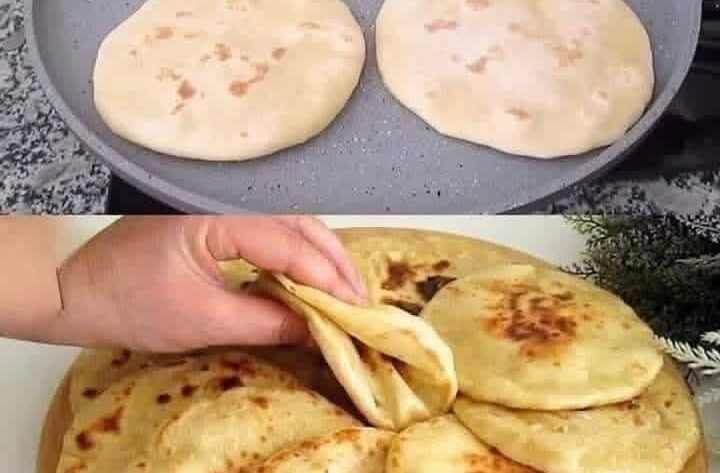
The finished flatbread should be cooked through but still soft and flexible.
Avoid overcooking, as this can make the bread dry.
Step 9: Keep the Flatbreads Soft
As each flatbread finishes cooking, transfer it immediately to a plate lined with a clean kitchen towel.
Cover the cooked flatbreads with another towel.
The trapped steam helps maintain softness and flexibility.
Continue cooking the remaining flatbreads using the same method.
Stack them on top of each other under the towel as they finish cooking.
Step 10: Prepare the Butter Mixture
In a small bowl, combine melted butter and olive oil.
For additional flavor, stir in finely minced garlic or fresh herbs.
Brush the warm flatbreads generously with the mixture immediately after cooking.
The butter adds richness while helping the surface remain soft.
Serving Suggestions
Soft skillet flatbread can be served in many ways:
With curries such as chicken curry, lentil curry, or vegetable curry.
Alongside grilled chicken, lamb, beef, or fish.
As a wrap for sandwiches and shawarma.
With hummus, baba ganoush, or yogurt dips.
As a side for soups and stews.
With scrambled eggs and breakfast fillings.
Topped with cheese and herbs for a quick snack.
Used as a base for personal pizzas.
Served with roasted vegetables and salads.
Tips for Extra Soft Flatbread
Using warm milk instead of all water contributes to a softer texture.
Yogurt helps create tenderness and improves flavor.
Do not add excessive flour during kneading.
Allow sufficient rising time for the dough to become airy.
Cook on medium-high heat rather than low heat.
Stack cooked flatbreads under a towel immediately.
Brush with butter while still warm.
Store properly to retain moisture.
Avoid overcooking, which can dry the bread.
A slightly softer dough generally produces softer flatbread.
Storage Instructions
Allow the flatbreads to cool completely.
Place them in an airtight container or sealed plastic bag.
Store at room temperature for up to 2 days.
For longer storage, refrigerate for up to 5 days.
To freeze, place parchment paper between each flatbread and store in a freezer-safe bag for up to 3 months.
Reheating Instructions
To reheat in a skillet, warm each flatbread for about 20 to 30 seconds per side.
To reheat in the microwave, wrap in a damp paper towel and heat for 15 to 20 seconds.
For frozen flatbreads, thaw at room temperature before reheating.
Variations
Garlic Flatbread
Add 2 teaspoons garlic powder to the flour mixture and brush with garlic butter after cooking.
Herb Flatbread
Mix dried oregano, basil, parsley, or mixed herbs into the dough.
Whole Wheat Flatbread
Replace half of the all-purpose flour with whole wheat flour for a nuttier flavor and additional fiber.
Cheese-Stuffed Flatbread
Place shredded mozzarella or cheddar between two thin rounds of dough, seal the edges, and cook as directed.
Spicy Flatbread
Add chili flakes, paprika, or finely chopped green chilies to the dough.
Honey Butter Flatbread
Brush cooked flatbreads with a mixture of melted butter and honey for a slightly sweet version.
Troubleshooting Guide
Flatbread Is Too Dense
The dough may not have risen enough, or too much flour may have been added during kneading.
Flatbread Is Dry
The bread was likely cooked too long or the dough contained insufficient moisture.
Dough Keeps Shrinking
The gluten has not relaxed sufficiently. Allow the dough to rest for 10 to 15 more minutes.
Bread Does Not Puff
The skillet may not be hot enough, or the dough may have been rolled unevenly.
Dough Is Too Sticky
Add flour one tablespoon at a time while kneading until the dough becomes manageable.
Final Notes
This soft skillet flatbread recipe creates tender, fluffy, and flexible breads with a beautiful golden exterior and a soft interior. The combination of milk, yogurt, oil, proper kneading, adequate resting time, and skillet cooking results in flatbreads that stay soft for hours and reheat exceptionally well. Whether served with hearty meals, wrapped around fillings, or enjoyed simply with butter, these homemade flatbreads provide a delicious and reliable addition to any table.