 admin1
 Introduction
Chia Seed Pudding is a simple, nutrient-dense, and versatile dish made by soaking chia seeds in liquid until they absorb the liquid and form a thick, pudding-like consistency. It is widely popular in healthy eating, vegan diets, ketogenic meal plans, gluten-free lifestyles, and weight management routines due to its high fiber content, healthy fats, and ability to keep you full for long periods.
The unique characteristic of chia seed pudding is its natural gel formation. When chia seeds are exposed to liquid, they absorb many times their weight and create a smooth, creamy texture without cooking. This makes it one of the easiest and most convenient make-ahead breakfasts or snacks.
This detailed recipe explains everything from ingredient selection and soaking techniques to flavor variations, nutritional benefits, troubleshooting, storage methods, and professional preparation strategies.
Preparation Time
Preparation time: 10 to 15 minutes
Soaking time: 2 to 8 hours (or overnight for best results)
Total time: Approximately 8 hours including resting
Yield
Serves 4 people as a full serving
Serves 6 to 8 people as a small snack portion
Ingredients
Basic Chia Pudding Base
1 cup chia seeds
4 cups milk (dairy milk or unsweetened almond milk, coconut milk, or oat milk)
2 to 4 tablespoons sweetener (honey, maple syrup, stevia, or monk fruit depending on preference)
1 teaspoon vanilla extract
1/4 teaspoon salt
Optional Creamy Additions
1/2 cup Greek yogurt
1/2 cup coconut cream
2 tablespoons heavy cream
Optional Thickening Adjustment
Extra chia seeds if too thin
Extra milk if too thick
Understanding Chia Seeds
Chia seeds are tiny edible seeds derived from the Salvia hispanica plant. Despite their small size, they are extremely rich in fiber, omega-3 fatty acids, plant-based protein, antioxidants, calcium, magnesium, and iron.
When soaked in liquid, chia seeds form a gel-like coating due to soluble fiber. This gives chia pudding its signature texture. The gel also slows digestion, helping stabilize blood sugar and prolong fullness.
Choosing the Liquid Base
The liquid you choose determines the flavor, texture, and nutritional profile of your chia pudding.
Dairy milk creates a richer and creamier pudding.
Almond milk produces a light and low-calorie version.
Coconut milk creates a thick, tropical, and indulgent texture.
Oat milk adds natural sweetness and smoothness.
Soy milk increases protein content.
Each option can be adjusted depending on dietary goals.
Mixing the Ingredients
In a large bowl or jar, pour the milk of your choice.
Add chia seeds slowly while stirring continuously.
This prevents clumping and ensures even distribution.
Add sweetener according to taste preference.
Add vanilla extract for aroma and flavor depth.
Add a small pinch of salt to enhance overall taste.
Whisk thoroughly for at least 2 to 3 minutes.
Proper mixing is essential because chia seeds tend to settle at the bottom if not evenly distributed.
Initial Resting Phase
After mixing, allow the mixture to sit for 10 to 15 minutes.
Then stir again thoroughly.
This second stir is very important because chia seeds begin to swell quickly and may clump together.
Breaking up clumps ensures smooth pudding consistency later.
Refrigeration Process
Cover the container tightly.
Place in the refrigerator for at least 2 hours.
For best results, leave it overnight for 6 to 8 hours.
During this time, chia seeds absorb liquid and expand into a gel-like pudding texture.
Understanding Texture Development
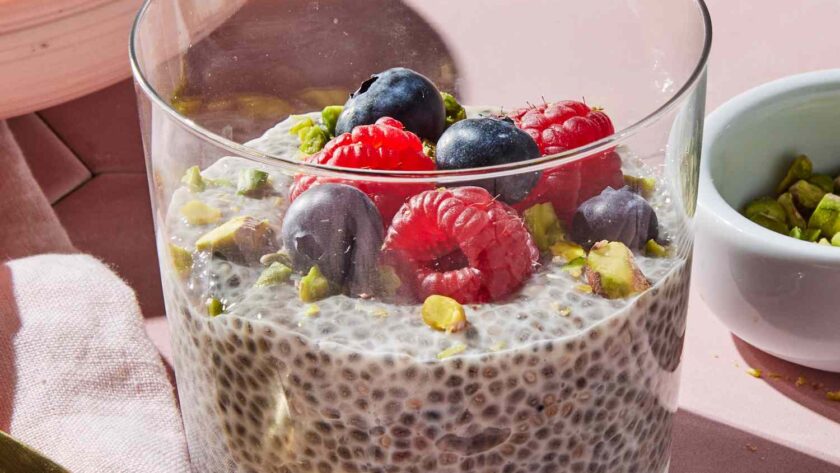
Chia pudding should have a thick, spoonable consistency similar to yogurt or mousse.
If too thin, add more chia seeds and refrigerate again.
If too thick, add more milk and stir well.
Texture depends on chia-to-liquid ratio, which can be adjusted based on preference.
Flavor Profile
Chia seed pudding has a mild, slightly nutty flavor that acts as a base for many different flavor combinations. It absorbs flavors from sweeteners, fruits, spices, and extracts very well, making it extremely versatile.
Classic Vanilla Chia Pudding
Add extra vanilla extract and honey for a simple dessert-like flavor.
Chocolate Chia Pudding
Add 2 to 3 tablespoons cocoa powder and extra sweetener for a rich chocolate taste.
Coconut Chia Pudding
Use coconut milk and top with shredded coconut for a tropical version.
Berry Chia Pudding
Add blended strawberries, blueberries, or raspberries.
Matcha Chia Pudding
Add matcha powder for earthy green tea flavor.
Peanut Butter Chia Pudding
Add 2 tablespoons peanut butter for a creamy protein-rich version.
Protein Chia Pudding
Add protein powder and extra milk for fitness-focused nutrition.
Serving Suggestions
Chia pudding can be served in many creative ways depending on preference.
Top with fresh fruits such as bananas, strawberries, mango, or blueberries.
Add nuts such as almonds, walnuts, or pecans for crunch.
Sprinkle seeds like pumpkin or sunflower seeds.
Drizzle honey or sugar-free syrup.
Layer with yogurt for parfait-style presentation.
Serve chilled for best texture.
Nutritional Benefits
Chia seeds are one of the most nutrient-dense foods available.
They provide:
High fiber content for digestion and satiety
Omega-3 fatty acids for heart and brain health
Plant-based protein for muscle support
Antioxidants for cellular protection
Calcium and magnesium for bone health
Iron for energy production
Combined with milk and toppings, chia pudding becomes a balanced meal with healthy fats, protein, and complex carbohydrates.
Approximate Nutrition Per Serving
Calories: 200 to 400
Protein: 6 to 15 grams
Fat: 10 to 20 grams
Carbohydrates: 10 to 25 grams
Fiber: 8 to 15 grams
Values vary depending on milk and toppings used.
Common Mistakes and Solutions
Problem: Pudding is too watery
Cause: Too much liquid or insufficient chia seeds
Solution: Add more chia seeds and refrigerate longer
Problem: Clumps in pudding
Cause: Poor mixing
Solution: Stir multiple times during first 20 minutes
Problem: Bland flavor
Cause: Insufficient sweetener or flavoring
Solution: Add vanilla, fruit, or spices
Problem: Too thick
Cause: Excess chia seeds
Solution: Add more milk and mix well
Problem: Seeds settle at bottom
Cause: Not stirring after initial mixing
Solution: Stir twice before refrigeration
Storage Instructions
Store chia pudding in airtight containers.
Refrigerate for up to 5 days.
Do not leave at room temperature for long periods.
Stir before serving if separation occurs.
Meal Prep Benefits
Chia seed pudding is ideal for meal preparation.
It can be made in large batches.
It holds well in the refrigerator.
It is portable and easy to pack for work or school.
It maintains texture for several days.
Healthy Variations
Keto Chia Pudding
Use unsweetened almond milk and keto sweetener.
High-Protein Chia Pudding
Add protein powder and Greek yogurt.
Tropical Chia Pudding
Add mango, pineapple, and coconut milk.
Chocolate Banana Chia Pudding
Add cocoa powder and mashed banana.
Green Detox Chia Pudding
Add spinach and green apple puree.
Overnight Oats Style Hybrid
Mix chia seeds with oats for thicker breakfast bowl.
Professional Tips
Always stir twice before refrigerating.
Use fresh chia seeds for best gel formation.
Adjust sweetness after soaking if needed.
Use glass jars for better presentation.
Layer toppings only before serving to maintain texture.
Do not skip resting time.
Use high-quality vanilla extract for better flavor.
Why This Recipe Works
Chia Seed Pudding works because of the natural hydrophilic properties of chia seeds, which allow them to absorb liquid and form a gel structure without cooking. This creates a naturally thick, creamy texture that is both satisfying and nutritious. The recipe is highly adaptable, making it suitable for many dietary lifestyles and flavor preferences while requiring minimal effort.
Final Recipe Summary
Chia Seed Pudding is a simple, healthy, and versatile dish made by soaking chia seeds in milk until they form a creamy pudding-like texture. It is rich in fiber, healthy fats, and essential nutrients, making it ideal for breakfast, snacks, or light desserts. With endless flavor variations and easy preparation, it is one of the most convenient and nutritious recipes for modern healthy eating.