 admin1
 Teriyaki Pineapple Chicken Foil Packets
Introduction
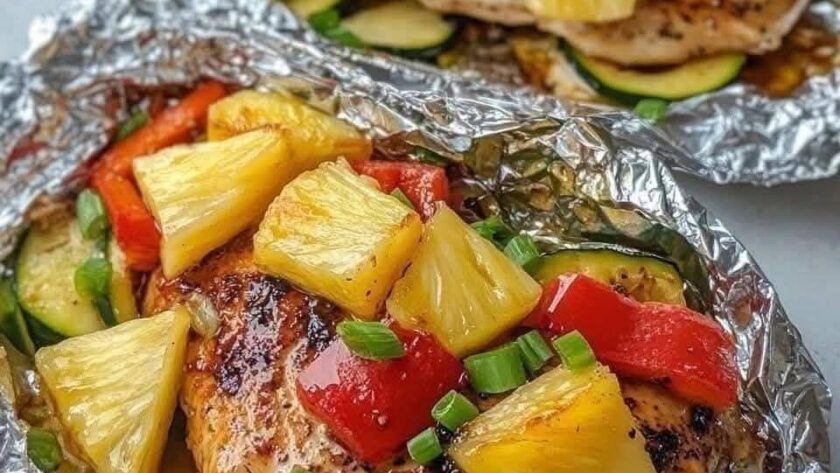
Teriyaki Pineapple Chicken Foil Packets are a flavorful and convenient meal that combines tender chicken, sweet pineapple, colorful vegetables, and a rich teriyaki sauce, all cooked together inside sealed foil packets. This cooking method allows the ingredients to steam and roast simultaneously, locking in moisture and creating an exceptionally juicy and aromatic dish. The natural sweetness of pineapple blends beautifully with the savory, slightly salty teriyaki sauce, while the vegetables absorb all the delicious juices released during cooking.
Foil packet meals are popular because they require minimal cleanup, are easy to prepare, and can be cooked in the oven, on a grill, or even over a campfire. This detailed recipe covers ingredient selection, preparation methods, cooking techniques, flavor enhancements, serving suggestions, storage recommendations, troubleshooting tips, and multiple variations.
Yield
Serves 6 people
Preparation Time: 35 minutes
Marinating Time: 1 to 4 hours
Cooking Time: 25 to 35 minutes
Total Time: Approximately 2 to 5 hours depending on marination
Ingredients
For the Chicken
2 kilograms boneless skinless chicken thighs or chicken breasts
1 teaspoon salt
1 teaspoon black pepper
1 teaspoon garlic powder
1 teaspoon onion powder
1 teaspoon paprika
1 tablespoon vegetable oil
For the Homemade Teriyaki Sauce
1 cup low-sodium soy sauce
¾ cup brown sugar
½ cup pineapple juice
¼ cup honey
4 cloves garlic, finely minced
2 teaspoons fresh ginger, grated
2 tablespoons rice vinegar
1 tablespoon sesame oil
2 tablespoons cornstarch
3 tablespoons water
For the Vegetables
2 large red bell peppers, diced
2 large yellow bell peppers, diced
1 large green bell pepper, diced
2 medium red onions, cut into chunks
2 medium zucchini, sliced
2 cups broccoli florets
2 large carrots, sliced thinly
1 cup snap peas
For the Pineapple
4 cups fresh pineapple chunks
For Garnishing
4 green onions, thinly sliced
2 tablespoons sesame seeds
Fresh cilantro, chopped
Lime wedges for serving
Cooked rice for serving
Understanding the Dish
The success of this recipe comes from balancing sweet, savory, tangy, and fresh flavors. Pineapple provides natural sugars and acidity that help tenderize the chicken. Teriyaki sauce contributes umami depth through soy sauce, sweetness through brown sugar and honey, and complexity through garlic and ginger. The vegetables provide texture, color, and nutritional value.
When sealed inside foil packets, all ingredients cook together in their own flavorful steam. This prevents moisture loss and creates exceptionally tender chicken.
Selecting the Best Chicken
Chicken thighs are often preferred because they remain juicy and flavorful even after extended cooking. Their slightly higher fat content contributes richness to the finished dish.
Chicken breasts are also suitable and provide a leaner option. If using breasts, try to cut the pieces evenly so they cook uniformly and avoid becoming dry.
Fresh chicken should appear firm, moist, and pink with no unpleasant odor.
Choosing Pineapple
Fresh pineapple is highly recommended because it offers superior flavor and texture.
A ripe pineapple should have:
Golden coloring
A sweet aroma
Slight softness when pressed
Healthy green leaves
If fresh pineapple is unavailable, canned pineapple chunks packed in juice may be used. Drain them thoroughly before use.
Reserve some pineapple juice for the teriyaki sauce if using canned pineapple.
Preparing the Chicken
Trim any excess fat from the chicken.
Cut into bite-sized cubes approximately 2.5 to 4 centimeters in size.
Place chicken pieces into a large mixing bowl.
Add salt, pepper, garlic powder, onion powder, paprika, and vegetable oil.
Mix thoroughly until all pieces are evenly coated.
Set aside while preparing the sauce.
Making the Homemade Teriyaki Sauce
In a saucepan, combine soy sauce, brown sugar, pineapple juice, honey, minced garlic, grated ginger, rice vinegar, and sesame oil.
Place over medium heat.
Stir continuously until the sugar dissolves completely.
Bring the mixture to a gentle simmer.
In a separate bowl, mix cornstarch and water until smooth.
Slowly pour the slurry into the saucepan while whisking continuously.
Continue cooking for approximately 3 to 5 minutes.
The sauce will gradually thicken and develop a glossy appearance.
Remove from heat.
Allow the sauce to cool slightly before using.
The sauce should coat the back of a spoon without becoming overly thick.
Marinating the Chicken
Pour approximately half of the cooled teriyaki sauce over the seasoned chicken.
Reserve the remaining sauce for later use.
Mix thoroughly.
Cover and refrigerate for at least one hour.
For deeper flavor, marinate for up to four hours.
During marination, the chicken absorbs the sweet and savory components of the sauce while the pineapple juice gently tenderizes the meat.
Preparing the Vegetables
Wash all vegetables thoroughly.
Dice the bell peppers into uniform pieces.
Slice the zucchini into rounds.
Cut onions into medium chunks.
Slice carrots thinly to ensure they cook evenly.
Separate broccoli into bite-sized florets.
Trim snap peas if necessary.
Place all vegetables into a large bowl.
Toss lightly to distribute them evenly.
Preparing the Foil
Use heavy-duty aluminum foil whenever possible.
Cut six large sheets approximately 40 centimeters long.
For extra durability, use double layers.
Lightly coat the center of each foil sheet with cooking spray or a small amount of oil.
This helps prevent sticking.
Assembling the Packets
Place a generous layer of vegetables in the center of each foil sheet.
Top with marinated chicken pieces.
Distribute pineapple chunks evenly among all packets.
Spoon a small amount of reserved teriyaki sauce over each portion.
Ensure ingredients remain centered to allow proper sealing.
Avoid overfilling the packets.
Leave sufficient space for steam circulation.
Sealing the Packets
Bring the long sides of the foil together above the food.
Fold several times to create a secure seal.
Fold the ends inward tightly.
The packets should be fully enclosed.
Proper sealing traps steam and ensures even cooking.
Check carefully for gaps or tears.
Oven Cooking Method
Preheat oven to 200°C.
Arrange packets on large baking sheets.
Place in the center rack.
Bake for approximately 25 to 35 minutes.
Cooking time may vary depending on packet size and chicken thickness.
The packets will puff slightly as steam accumulates.
When fully cooked, the chicken should reach an internal temperature of 75°C.
Allow packets to rest for 5 minutes before opening.
Open carefully because hot steam will escape.
Grill Cooking Method
Preheat grill to medium-high heat.
Place packets directly on the grill grates.
Close the lid.
Cook for approximately 20 to 30 minutes.
Turn packets once halfway through cooking.
The grill imparts subtle smoky flavors that complement the pineapple and teriyaki sauce beautifully.
Check one packet carefully before removing all of them.
Ensure chicken is fully cooked.
Campfire Cooking Method
Prepare a campfire with stable hot coals.
Place packets around the edge of the hottest area.
Cook for approximately 20 to 30 minutes.
Rotate occasionally.
This method creates a rustic, smoky flavor that many people find especially appealing.
Finishing the Dish
After cooking, open each packet carefully.
Spoon any accumulated juices over the chicken and vegetables.
Drizzle additional reserved teriyaki sauce if desired.
Sprinkle generously with green onions.
Add sesame seeds.
Finish with fresh cilantro.
Serve immediately while hot.
Flavor Development During Cooking
As the packets cook, several important processes occur.
The pineapple releases juices that blend with the teriyaki sauce.
Chicken juices enrich the sauce further.
Vegetables absorb flavorful steam.
The sugars caramelize slightly.
Garlic and ginger become more aromatic.
All ingredients exchange flavors within the enclosed environment.
This creates a cohesive and deeply satisfying final dish.
Serving Suggestions
Serve over steamed jasmine rice.
Pair with brown rice.
Serve alongside coconut rice.
Accompany with fried rice.
Serve with rice noodles.
Pair with quinoa.
Serve alongside Asian-style slaw.
Accompany with cucumber salad.
Serve with roasted edamame.
Pair with sesame noodles.
Include fresh fruit salad.
Serve with grilled corn.
Accompany with vegetable stir-fry.
Pair with garlic green beans.
Serve alongside roasted sweet potatoes.
Nutritional Benefits
Chicken provides high-quality protein.
Pineapple contributes vitamin C and natural enzymes.
Bell peppers provide antioxidants and vitamins.
Broccoli offers fiber and nutrients.
Carrots contribute beta-carotene.
Snap peas provide additional vitamins and minerals.
The meal contains a balanced combination of protein, vegetables, and natural sweetness.
Extra Sweet Variation
Increase honey to ¾ cup.
Add additional pineapple chunks.
Include a tablespoon of brown sugar in each packet.
This version emphasizes tropical sweetness.
Spicy Variation
Add 2 teaspoons chili flakes.
Mix in diced jalapeños.
Add sriracha to the teriyaki sauce.
Include crushed red pepper.
The sweet pineapple balances the heat effectively.
Hawaiian-Inspired Variation
Add diced ham.
Include extra pineapple.
Add sliced sweet onions.
Serve with coconut rice.
This variation delivers classic Hawaiian-inspired flavors.
Vegetable-Loaded Variation
Increase broccoli quantity.
Add mushrooms.
Include baby corn.
Add asparagus pieces.
Include water chestnuts.
Increase snap peas.
This version creates an especially colorful and nutritious meal.
Low-Sugar Variation
Reduce brown sugar by half.
Reduce honey quantity.
Use unsweetened pineapple juice.
Rely on pineapple’s natural sweetness.
The result remains flavorful while containing less added sugar.
Meal Preparation Instructions
Prepare packets up to 24 hours in advance.
Store assembled packets in the refrigerator.
Cook directly from refrigerated conditions.
Add several extra minutes to cooking time.
This makes the recipe ideal for busy schedules.
Storage Instructions
Allow leftovers to cool completely.
Transfer contents to airtight containers.
Refrigerate for up to 4 days.
Store rice separately when possible.
Proper storage helps preserve texture and flavor.
Freezing Instructions
Cool completely before freezing.
Place portions into freezer-safe containers.
Freeze for up to 3 months.
Label containers clearly with preparation dates.
Thaw overnight in the refrigerator before reheating.
Reheating Instructions
For oven reheating, place contents in a covered baking dish and heat at 180°C until warmed through.
For microwave reheating, heat in short intervals while stirring occasionally.
For stovetop reheating, warm gently in a skillet with a small amount of water or additional teriyaki sauce.
Common Mistakes and Solutions
Using thin foil may result in tears and leakage. Heavy-duty foil is preferred.
Overfilling packets restricts steam circulation. Leave room around ingredients.
Insufficient sealing allows moisture to escape. Fold edges securely.
Large vegetable pieces may cook unevenly. Cut ingredients uniformly.
Excess sauce can make packets watery. Use moderate amounts.
Overcooking chicken may reduce tenderness. Monitor cooking times carefully.
Opening packets immediately can cause burns from escaping steam. Allow a brief resting period.
Professional Tips
Marinate the chicken for several hours whenever possible.
Use fresh ginger rather than powdered ginger.
Fresh pineapple provides superior flavor and texture.
Cut vegetables uniformly for even cooking.
Reserve some sauce for serving.
Double-wrap packets for grilling or campfire cooking.
Allow packets to rest before opening.
Use an instant-read thermometer for accurate doneness.
Add garnishes immediately before serving.
Serve while hot for the best flavor experience.
Conclusion
Teriyaki Pineapple Chicken Foil Packets combine juicy chicken, vibrant vegetables, sweet pineapple, and a rich homemade teriyaki sauce into a complete meal that is flavorful, convenient, and visually appealing. The foil packet method locks in moisture, enhances flavor integration, and simplifies cleanup while producing tender chicken and perfectly cooked vegetables. Whether baked in the oven, grilled outdoors, or cooked over a campfire, this dish delivers a satisfying balance of sweet, savory, tangy, and aromatic flavors that make it suitable for family dinners, meal preparation, gatherings, outdoor adventures, and special occasions. The recipe’s versatility allows countless variations while maintaining the tropical teriyaki character that makes this meal a favorite among both adults and children.