 admin1
 Cheeseburger is a simple idea, but making a truly great one at home involves attention to ingredients, technique, and timing. Below is a very detailed, long-form recipe written in plain text without any icons, lines, or decorative formatting.
A classic cheeseburger starts with the bun. The best choice is a soft yet slightly sturdy burger bun that can hold juices without falling apart. Brioche buns are often preferred because they are slightly sweet and buttery, but regular sesame seed buns also work well. Before assembling anything, the buns should be lightly toasted. This step is important because it creates a barrier that prevents the bun from getting soggy when the hot beef and cheese are added later. Toasting can be done in a dry pan or with a very small amount of butter until the inside surfaces become golden and slightly crisp.
The next essential component is the beef patty. For a proper cheeseburger, ground beef with around 20 percent fat content is ideal. The fat is what keeps the patty juicy and flavorful. The meat should be handled gently because overworking it will make the burger dense and tough. A simple seasoning of salt and black pepper is usually enough. The beef is divided into equal portions depending on how large you want the burger to be. Each portion is shaped into a round patty slightly wider than the bun because it will shrink during cooking. The center of each patty can be pressed slightly thinner than the edges to help it cook evenly and avoid puffing up in the middle.
Cooking the patty properly is the heart of the recipe. A heavy skillet or cast iron pan is ideal because it retains high heat. The pan should be preheated until it is very hot before the patties are added. When placed on the surface, the beef should sizzle immediately. The first side is cooked without moving it for several minutes so that a deep brown crust forms. This crust is where much of the flavor develops through browning reactions. After flipping the patty, the second side is cooked for a slightly shorter time depending on desired doneness. For a classic juicy cheeseburger, the inside is often cooked to medium or medium-well.
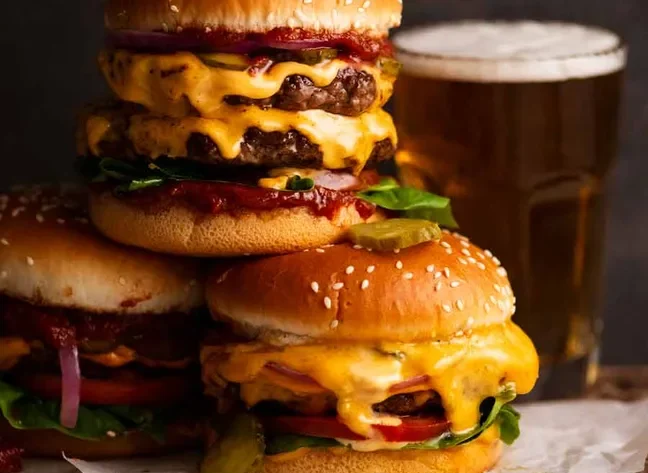
Cheese is added during the final stage of cooking the patty. A slice of cheese is placed directly on top of the hot beef while it is still in the pan. The heat from the meat melts the cheese so it becomes soft, creamy, and slightly draped over the edges of the patty. Cheddar cheese is the most traditional choice, but American cheese is also commonly used because it melts very smoothly. Some people prefer Swiss cheese or pepper jack for a stronger flavor variation.
While the patties are resting slightly after cooking, attention turns to the condiments and toppings. A classic cheeseburger often includes lettuce, tomato, onion, pickles, ketchup, mustard, and mayonnaise. The lettuce should be crisp and dry so it adds freshness and crunch. The tomato should be sliced thin but firm so it does not make the burger watery. Onions can be used raw for sharpness or lightly grilled for sweetness. Pickles add acidity and balance to the richness of the beef and cheese. The sauces can be adjusted according to taste, but a common combination is mayonnaise on the bottom bun and ketchup or mustard on the top bun.
Assembly is done in a specific order to maintain structure and flavor balance. The bottom bun is placed first, followed by a layer of sauce if desired. Then lettuce is added to act as a moisture barrier. The hot cheeseburger patty goes on top of the lettuce so that the cheese sits directly against it. Tomato slices are added next, followed by onions and pickles if using them. More sauce can be added on the top bun if preferred. Finally, the top bun is placed gently but firmly to hold everything together.
After assembly, the burger should be served immediately while the patty is still warm and the cheese is melted. A cheeseburger is best enjoyed fresh because the texture contrast between the hot beef, melted cheese, crisp vegetables, and soft bun is what makes it satisfying.
If you want, I can also give you a restaurant-style version, a spicy version, or a fast-food copycat version next.