 admin1
 Mango Sticky Rice
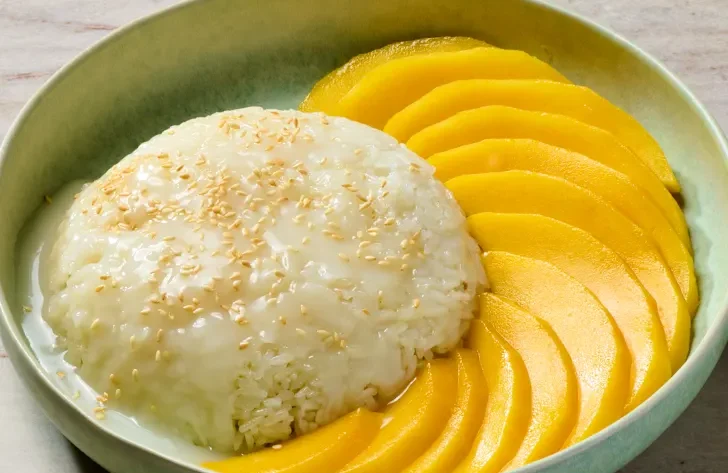
Mango Sticky Rice is a famous Thai dessert that combines sweet glutinous rice, creamy coconut sauce, and ripe juicy mangoes. The dessert is known for its wonderful contrast of textures and flavors: soft sticky rice infused with coconut milk, sweet fragrant mango slices, and a rich coconut topping. Although simple in appearance, achieving the perfect balance of sweetness, creaminess, and texture requires careful preparation. This detailed recipe produces an authentic, restaurant-quality Mango Sticky Rice suitable for family meals, celebrations, and special occasions.
Ingredients
For the Sticky Rice
300 grams Thai glutinous rice (sticky rice)
500 milliliters water for soaking
For the Coconut Rice Mixture
400 milliliters full-fat coconut milk
100 grams granulated sugar
½ teaspoon salt
For the Coconut Topping Sauce
200 milliliters coconut milk
1 tablespoon sugar
¼ teaspoon salt
1 teaspoon cornstarch
1 tablespoon water
For Serving
3 to 4 ripe sweet mangoes
1 tablespoon toasted sesame seeds (optional)
2 tablespoons lightly toasted mung beans (optional)
Fresh mint leaves for garnish (optional)
Understanding Sticky Rice
Traditional Mango Sticky Rice uses glutinous rice, sometimes called sweet rice. Despite its name, it does not contain gluten. This variety becomes soft, sticky, and slightly chewy after steaming, which is essential for the authentic texture of the dessert. Regular long-grain rice or basmati rice should not be substituted because they do not produce the characteristic sticky texture.
Preparing the Rice
Place the sticky rice in a large bowl.
Wash it several times until the water becomes mostly clear. This removes excess surface starch and improves the final texture.
Cover the rice completely with water.
Allow the rice to soak for at least 6 hours, preferably overnight. Soaking helps the grains absorb moisture and cook evenly.
After soaking, drain the rice thoroughly.
Steaming the Sticky Rice
Fill a steamer pot with water and bring it to a gentle boil.
Line a bamboo steamer or steaming basket with a clean cloth.
Spread the soaked rice evenly inside the steamer.
Cover and steam for approximately 25 to 35 minutes.
Halfway through steaming, gently turn the rice for even cooking.
The rice should become translucent, tender, and sticky while maintaining distinct grains.
Preparing the Sweet Coconut Mixture
While the rice is steaming, combine coconut milk, sugar, and salt in a saucepan.
Heat over low heat while stirring continuously.
Do not boil the mixture.
Continue heating until the sugar dissolves completely.
Remove from heat.
Combining the Rice and Coconut Mixture
Transfer the hot steamed rice into a large mixing bowl.
Gradually pour the sweetened coconut milk over the hot rice.
Gently fold and mix until all the liquid is absorbed.
Cover the bowl with a lid or plastic wrap.
Allow the rice to rest for 30 to 45 minutes.
During this resting period, the rice absorbs the coconut mixture and develops its rich, creamy flavor.
Preparing the Coconut Topping Sauce
Combine coconut milk, sugar, and salt in a small saucepan.
Mix cornstarch with water to form a smooth slurry.
Add the slurry to the coconut milk mixture.
Cook over low heat while stirring constantly.
Continue until the sauce thickens slightly.
Remove from heat and allow it to cool.
The sauce should be pourable but slightly thick.
Preparing the Mangoes
Wash the mangoes thoroughly.
Peel the skin carefully.
Slice the flesh away from the seed.
Cut into elegant slices or cubes.
Choose mangoes that are fully ripe, sweet, fragrant, and free from excessive fibers.
Assembling the Dessert
Place a portion of coconut sticky rice on a serving plate.
Shape it neatly using a small bowl or mold if desired.
Arrange mango slices beside the rice.
Spoon the coconut topping sauce generously over the rice.
Sprinkle toasted sesame seeds or toasted mung beans over the top.
Serve immediately while the rice remains slightly warm and the mangoes are chilled or at room temperature.
Traditional Thai Method
Authentic Thai vendors often prepare the rice several hours ahead and allow it to absorb coconut milk slowly. This creates a deeper flavor and a softer texture. The coconut topping is added only at serving time to preserve the appearance and texture of the dessert.
Professional Tips for Perfect Mango Sticky Rice
Always use glutinous rice rather than regular rice.
Soak the rice for sufficient time to ensure even cooking.
Steam rather than boil the rice for the authentic texture.
Use full-fat coconut milk for maximum richness.
Never boil the coconut milk aggressively because it may separate.
Add coconut milk to the rice while both are still warm.
Allow enough resting time for the rice to absorb the coconut flavor.
Choose naturally sweet mangoes to reduce the need for extra sugar.
Serve fresh for the best texture and flavor.
Premium Mango Sticky Rice
Additional Ingredients
2 tablespoons coconut cream
1 tablespoon condensed milk
1 tablespoon toasted coconut flakes
Method
Mix coconut cream and condensed milk into the coconut topping sauce.
Prepare the sticky rice as directed.
Serve with mango slices and finish with toasted coconut flakes.
This version creates an even richer and more luxurious dessert.
Mango Sticky Rice with Coconut Cream Layer
Ingredients
Prepared sticky rice
Prepared mango slices
150 milliliters thick coconut cream
2 tablespoons powdered sugar
Method
Whisk coconut cream and powdered sugar until smooth.
Spread a thin layer over the sticky rice before serving.
Top with mango slices and coconut sauce.
This variation produces a dessert similar to those served in high-end restaurants.
Nutritional Information (Approximate Per Serving)
Calories: 350–500
Protein: 4–6 grams
Carbohydrates: 55–70 grams
Fat: 12–20 grams
Fiber: 2–4 grams
Sugar: 20–35 grams
Storage Instructions
Store leftover sticky rice in an airtight container in the refrigerator for up to 2 days.
Store mangoes separately.
Reheat the rice gently before serving.
Prepare fresh coconut topping if possible.
Avoid freezing because the texture of both the rice and mangoes may deteriorate.
The finished Mango Sticky Rice should have tender, glossy grains infused with sweet coconut flavor, a silky coconut sauce, and perfectly ripe mangoes that provide natural sweetness and freshness. Every bite delivers a balance of creamy, fruity, and lightly salty flavors that make this dessert one of Thailand’s most beloved culinary creations.